
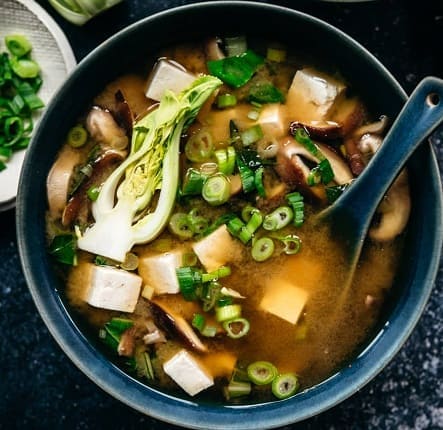
Vegetable Miso Soup
Miso soup is a staple of Japanese cuisine, often served as a comforting start to a meal. While traditional miso soup includes dashi (fish-based broth) and tofu, this Vegetable Miso Soup takes a plant-based, veggie-rich twist that makes it a wholesome, one-bowl meal on its own.
With its gentle umami flavor, gut-friendly probiotics, and nourishing seasonal vegetables, this soup is a go-to for anyone seeking warmth, nutrition, and simplicity. Whether you’re under the weather or just craving something light yet satisfying, vegetable miso soup is the answer.
It’s easy to prepare, requires minimal cooking, and can be endlessly customized with whatever veggies you have on hand.
Ingredients
(Serves 4–5 bowls)
Soup Base
- 6 cups water
- 3 tablespoons white or yellow miso paste (adjust to taste)
- 1 tablespoon soy sauce or tamari
- 1 teaspoon grated fresh ginger (optional but adds depth)
- Vegetables
- 1 cup napa cabbage or bok choy, chopped
- ½ cup carrots, julienned or thinly sliced
- ½ cup mushrooms (shiitake or button), thinly sliced
- ¼ cup spring onions or scallions, chopped
- ½ cup zucchini, thinly sliced (optional)
- ½ cup cubed tofu (firm or silken), optional
Add-ons (Optional but Recommended)
- 1 teaspoon sesame oil (for finishing)
- Handful of fresh spinach or baby greens
- Seaweed (wakame), soaked and chopped – 1 tablespoon dry wakame expands in water
- Rice noodles or soba (for a more filling meal)
How to Make Vegetable Miso Soup
Step 1: Prepare the Broth
In a large pot, bring 6 cups of water to a gentle boil. If using ginger, add it at this stage to infuse flavor into the broth.
Step 2: Add Vegetables
Add the carrots, mushrooms, and cabbage. Cook for 5–7 minutes until they begin to soften. Add zucchini and tofu (if using) and simmer for another 2–3 minutes.
Step 3: Add Greens and Seaweed
Add in spinach or baby greens and soaked seaweed (if using). Let them wilt in the hot broth.
Step 4: Incorporate the Miso Paste
Reduce heat to the lowest setting (important to preserve the probiotics in miso). Take ½ cup of hot broth in a small bowl, stir in the miso paste until smooth, then pour it back into the pot. Stir gently. Do not boil after adding miso—this kills its beneficial bacteria and affects the flavor.
Step 5: Final Seasoning
Add soy sauce and a light drizzle of sesame oil. Stir, taste, and adjust seasoning if needed.
Step 6: Serve Hot
Ladle into bowls and top with scallions. Serve immediately, ideally with steamed rice or dumplings on the side for a complete meal.
Chef’s Notes
Don’t Boil Miso: Always add miso at the end and keep the heat low to preserve its health benefits and umami-rich flavor.
Name | Position | Office | Age |
Vegetable Spring Rolls |  | ||
Cobb Salad |  | ||
Spinach and Ricotta Stuffed Shells |  |
Add Noodles for Heft: For a heartier meal, add cooked rice noodles or soba before serving.
Miso Types: White miso is sweeter and milder; red miso is stronger and more fermented. Start with white miso if you’re new to it.
Storage: Miso soup tastes best fresh but can be refrigerated for up to 2 days. Reheat gently—don’t boil.
Tofu Tips: Silken tofu gives a smooth texture; firm tofu holds shape better. Either can work depending on preference.
Nutritional Information (Per Serving)
(Based on 5 servings)
- Calories: 110 kcal
- Protein: 6g
- Fat: 4g
- Carbohydrates: 13g
- Fiber: 2g
- Sugars: 3g
- Sodium: 580mg
- Calcium: 10% RDA
- Iron: 6% RDA
- Vitamin A: 45% RDA
- Vitamin C: 20% RDA
Miso soup is low in calories and high in gut-friendly probiotics and antioxidants, especially when made fresh with seasonal vegetables.
Frequently Asked Questions (FAQs)
What is miso paste, and where can I buy it?
Miso paste is a fermented soybean paste used in Japanese cooking. It’s available at Asian grocery stores, health food stores, and many supermarkets (look in the refrigerated section).
Can I make miso soup without tofu?
Absolutely. Tofu adds protein but is entirely optional. You can replace it with chickpeas, edamame, or skip it altogether.
Is miso soup vegan?
Yes, if made with water or vegetable broth and without fish-based dashi, it’s completely vegan.
How do I make the soup saltier or more flavorful?
Use soy sauce or tamari to adjust saltiness, or add more miso paste gradually. Always taste before adjusting.
Can I freeze miso soup?
Freezing miso soup isn’t recommended as the miso and tofu may separate and change texture. Make small fresh batches when possible.
Conclusion
Vegetable Miso Soup is more than just a starter—it’s a celebration of clean, mindful eating. With every sip, you’re giving your body nourishment and your tastebuds a dose of umami satisfaction. Whether you’re easing into a detox, exploring Japanese-inspired meals, or simply craving something warm and nutritious, this soup is the answer.
It’s flexible, quick to prepare, and wonderfully satisfying. Make it once, and it’s likely to become a staple in your healthy cooking rotation.
Thanks for visiting Vegetables Recipe
Name | Position | Office | Age |
Quinoa Vegetable Salad |  | ||
Cauliflower Steaks |  | ||
Kale Salad with Lemon Vinaigrette |  |