
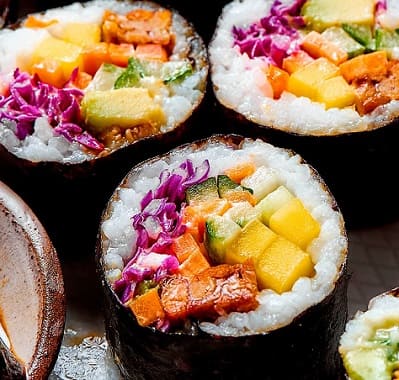
Vegetable Sushi Rolls
Sushi is no longer just a delicacy reserved for Japanese restaurants. Making vegetable sushi rolls at home is easier than you think, and it’s a fun, creative way to enjoy fresh, healthy ingredients wrapped in vinegared rice and seaweed.
These vibrant rolls are perfect for vegetarians, vegans, or anyone wanting a light, flavorful meal or snack. Packed with crunchy veggies, creamy avocado, and tangy pickled ginger, vegetable sushi rolls are satisfying, nutritious, and visually appealing.
Whether you’re new to sushi making or a seasoned pro, this recipe will guide you through the process step-by-step, including how to prepare the sushi rice, select and slice vegetables, roll the sushi tightly, and serve it with traditional accompaniments.
Ingredients
For the Sushi Rice:
1 cup sushi rice (short-grain rice)
1 1/4 cups water
3 tablespoons rice vinegar
1 tablespoon sugar
1/2 teaspoon salt
For the Vegetable Filling:
1 medium cucumber, julienned (remove seeds if desired)
1 medium carrot, peeled and julienned
1 ripe avocado, sliced thinly
1/2 red bell pepper, julienned
2-3 green onions, thinly sliced
1/2 cup pickled radish or pickled ginger (optional)
Fresh cilantro or basil leaves (optional for extra flavor)
For Rolling:
4 sheets nori (seaweed sheets)
Bamboo sushi rolling mat (optional but recommended)
For Serving:
Soy sauce
Wasabi
Pickled ginger
How to Make Vegetable Sushi Rolls
Step 1: Prepare the Sushi Rice
Rinse the sushi rice under cold water until the water runs clear. This removes excess starch for perfect sticky rice.
Combine rice and water in a pot or rice cooker. Cook according to package instructions or bring to a boil, then simmer covered for 15 minutes. Let it rest off the heat for 10 minutes.
In a small saucepan, gently heat rice vinegar, sugar, and salt until dissolved. Do not boil.
Transfer cooked rice to a large bowl, and while still warm, gently fold in the vinegar mixture with a wooden spoon or spatula. Avoid smashing the grains; instead, use a cutting motion and fan the rice to cool it quickly. Let rice cool to room temperature.
Step 2: Prepare the Vegetables
Wash, peel, and julienne the cucumber, carrot, and bell pepper into thin matchstick pieces.
Slice avocado thinly and toss lightly with lemon juice to prevent browning if desired.
Slice green onions and prepare any pickled vegetables.
Step 3: Assemble the Rolls
Place a sheet of nori shiny side down on the bamboo mat.
Name | Position | Office | Age |
Vegetable Spring Rolls |  | ||
Cobb Salad | 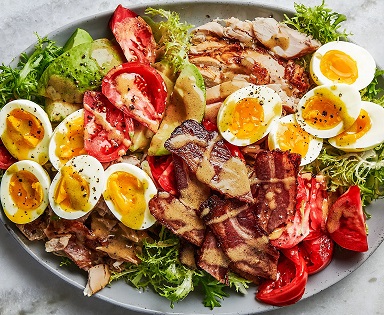 | ||
Spinach and Ricotta Stuffed Shells |  |
Wet your fingers with water to prevent rice sticking. Spread about 3/4 cup of sushi rice evenly over the nori, leaving a 1-inch border at the top edge. Press the rice gently but firmly.
Arrange a thin line of each vegetable ingredient horizontally across the middle of the rice. Add a few cilantro or basil leaves if using.
Lift the edge of the bamboo mat closest to you and start rolling away from you, pressing gently to keep the roll tight.
Roll until the edge of the nori seals the roll. Use a little water to moisten the edge if needed to seal.
Step 4: Slice the Rolls
Using a sharp, wet knife, slice the sushi roll into 6-8 equal pieces. Clean the knife between cuts to keep slices neat.
Step 5: Serve
Arrange sushi pieces on a plate. Serve with soy sauce, wasabi, and pickled ginger on the side.
Chef’s Notes
Rice: Using the right sushi rice is key. Short-grain rice is sticky and ideal. Avoid long-grain varieties.
Vinegar seasoning: Adjust sugar and salt to taste. Some prefer a slightly sweeter or tangier rice.
Vegetables: Feel free to add or substitute with other veggies like asparagus, sprouts, or thinly sliced mushrooms.
Rolling: A bamboo sushi mat makes rolling easier, but you can also use plastic wrap and your hands.
Storage: Sushi is best enjoyed fresh but can be refrigerated for up to 24 hours. Avoid freezing.
Serving: Pair with miso soup or seaweed salad for a complete Japanese-inspired meal.
Nutrition Information (Approximate per serving – 1 roll, about 6-8 pieces)
Calories: 250 kcal
Protein: 4g
Carbohydrates: 50g
Fat: 6g (mainly from avocado)
Fiber: 5g
Sugar: 4g
Sodium: 600mg (varies with soy sauce use)
Rich in vitamins A, C, potassium, and healthy fats
FAQs About Vegetable Sushi Rolls
Can I make sushi rolls without a bamboo mat?
Yes! You can roll sushi using plastic wrap and your hands, or just carefully roll with your fingers, though a bamboo mat helps achieve tighter rolls.
How do I keep the avocado from browning?
Slice avocado just before assembling and toss slices lightly in lemon or lime juice. Consume sushi soon after preparation for best freshness.
Can I add tofu or other protein?
Certainly! Firm tofu, tempeh, or cooked beans can add protein. Marinate or pan-fry tofu for more flavor before adding.
How do I prevent rice from sticking to my hands?
Wet your hands with water or a little rice vinegar before handling the sushi rice to prevent sticking.
What is the best way to store leftover sushi?
Store in an airtight container in the refrigerator and consume within 24 hours. Sushi rice hardens over time, so it’s best fresh.
Conclusion
Making vegetable sushi rolls at home is a rewarding culinary adventure that results in fresh, vibrant, and healthy bites packed with flavor. Once you master the sushi rice and rolling technique, you can customize your rolls endlessly with seasonal veggies and your favorite sauces. Perfect for light lunches, entertaining, or a fun cooking project with friends and family, these rolls offer a delicious, plant-based alternative that everyone will enjoy.
Thanks for visiting Vegetables Recipe
Name | Position | Office | Age |
Quinoa Vegetable Salad | 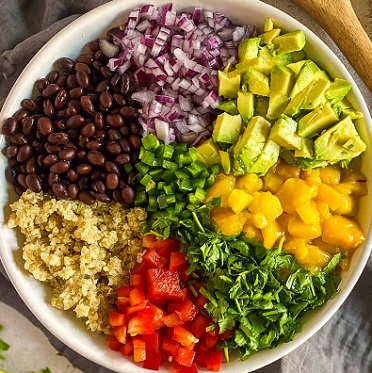 | ||
Cauliflower Steaks | 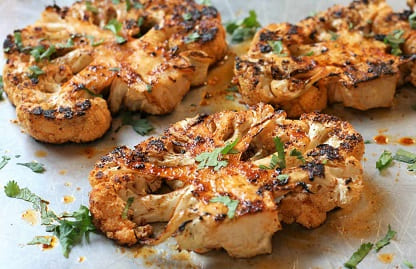 | ||
Kale Salad with Lemon Vinaigrette |  |